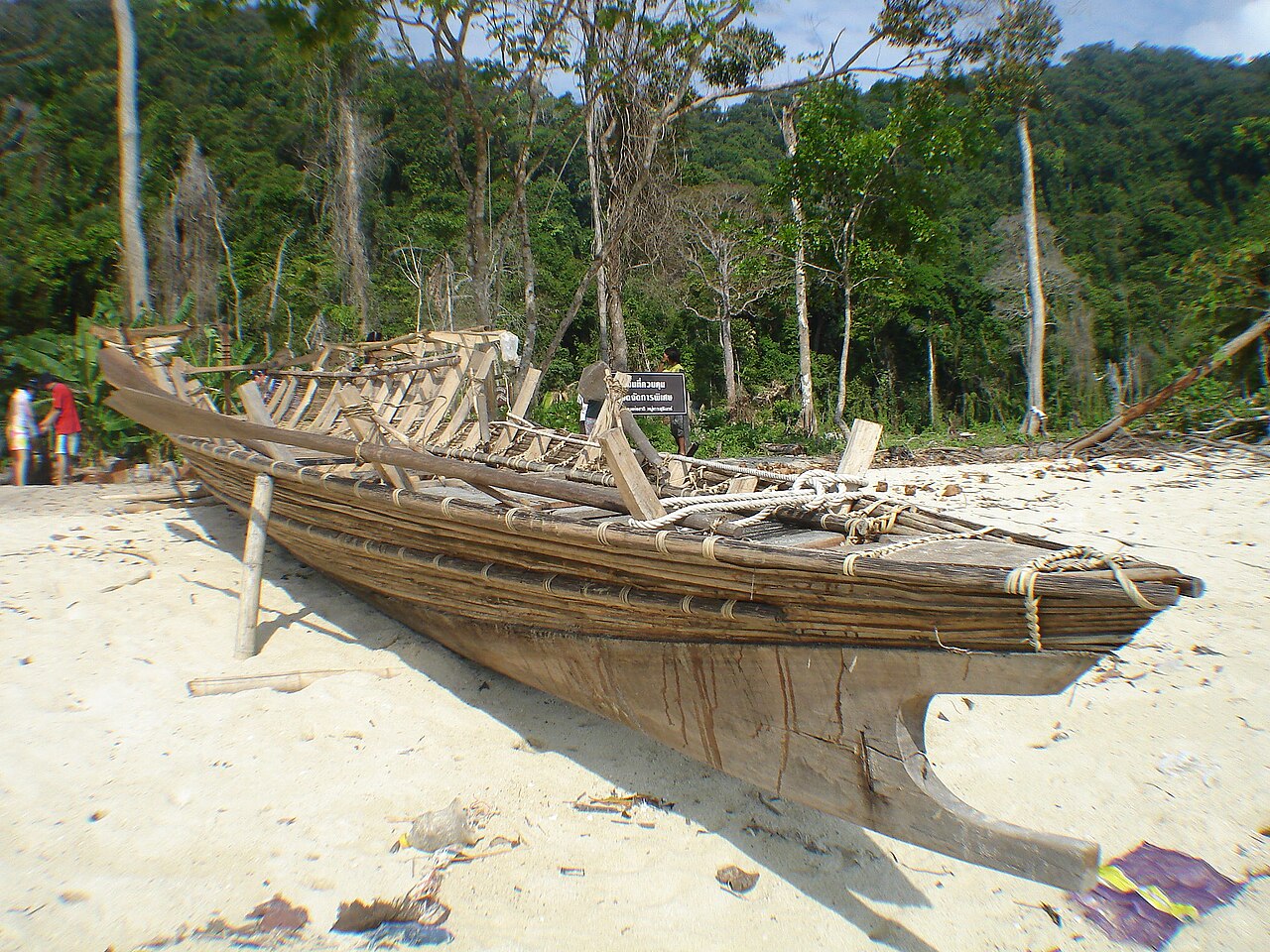
Image source and edits
Moken boat. Resized version from Wikimedia Commons; no further image editing.

Moken: knowledge of the sea and cultural heritage in the Surin Islands
Reworked with AI assistance. The Swedish text, image and caption were reviewed and approved by Johan Lundgren. Sources were checked on 14 November 2026.
Moken history is closely connected to the Andaman Sea. Knowledge of coastal environments, boats and seasonal changes has been passed down through generations. In Thailand’s Surin Islands, work is also underway to document that knowledge and strengthen communities’ ability to shape their future.
A changing way of life
Chulalongkorn University describes how the Moken once lived on boats during the dry season and sought shelter in bays during the rainy season. Fishing, gathering marine resources and exchanging goods were part of their livelihoods. This describes a historical way of life; it does not mean that all Moken live this way today. Source
The term “sea nomads” therefore captures only part of the story. It says less about how people in today’s communities combine family life, education, work and cultural identity.
Knowledge of the sea and its places
UNESCO highlights local knowledge passed on through stories and experience. For coastal communities, nature provides both a livelihood and places of cultural significance. In the organisation’s work in Thailand, local communities document natural resources and cultural practices themselves. Source
Place names are part of this knowledge. A study of the Surin Islands, listed in Mahidol University’s repository, examines Moken place names as carriers of traditional ecological knowledge. Language is thus also a way to access stories about the landscape and how it is used. Source
Community-led documentation
UNESCO describes training in which local groups learn to map and document their living heritage. This work creates opportunities for older and younger people to exchange knowledge and can inform discussions about conservation and development. It is about giving people tools to describe their own areas and priorities. Source
Practical questions about rights also matter
The future of a culture also involves access to public services and legal status. Chulalongkorn University reports on a project in the Surin Islands during 2022 and 2023 that worked on citizenship issues with the residents concerned and the authorities. The university describes barriers including language difficulties, long journeys and problems providing evidence of birth details. Source
The project account is historical. It shows the barriers the work encountered, but does not establish the current citizenship status of individuals or of all Moken.
A more accurate picture
Preserving knowledge need not mean that a community must remain unchanged. A useful starting point is to listen to people’s own choices and make room for their experiences in decisions about the environment and development. This article focuses on documented work around the Surin Islands and does not portray all Moken communities as the same.